
Staring at four blank walls that feel more like a sterile gallery than a sanctuary? You’re not alone. Many homeowners struggle with a space that feels “cold” or “echoey” despite having the right furniture.
The problem isn’t your square footage; it’s the lack of emotional warmth. Without the right layers, a house remains a structure, but it never becomes a retreat.The solution lies in sensory layering. By shifting your focus from “decorating” to “feeling,” you can transform any room into a cozy haven. Here is your definitive guide to mastering the art of the cozy home.
What Makes a Home Feel Truly Cozy?
To make a home feel cozy, you must prioritise warm ambient lighting (2700K), layer tactile textures like wool or faux fur, and incorporate natural elements like wood and plants. Using a warm colour palette and personal mementos creates an inviting, “lived-in” atmosphere that promotes relaxation and emotional comfort.
1. Master the “Golden Hour” Glow
The fastest way to kill a cozy vibe is “the big light”—that harsh, clinical overhead fixture.
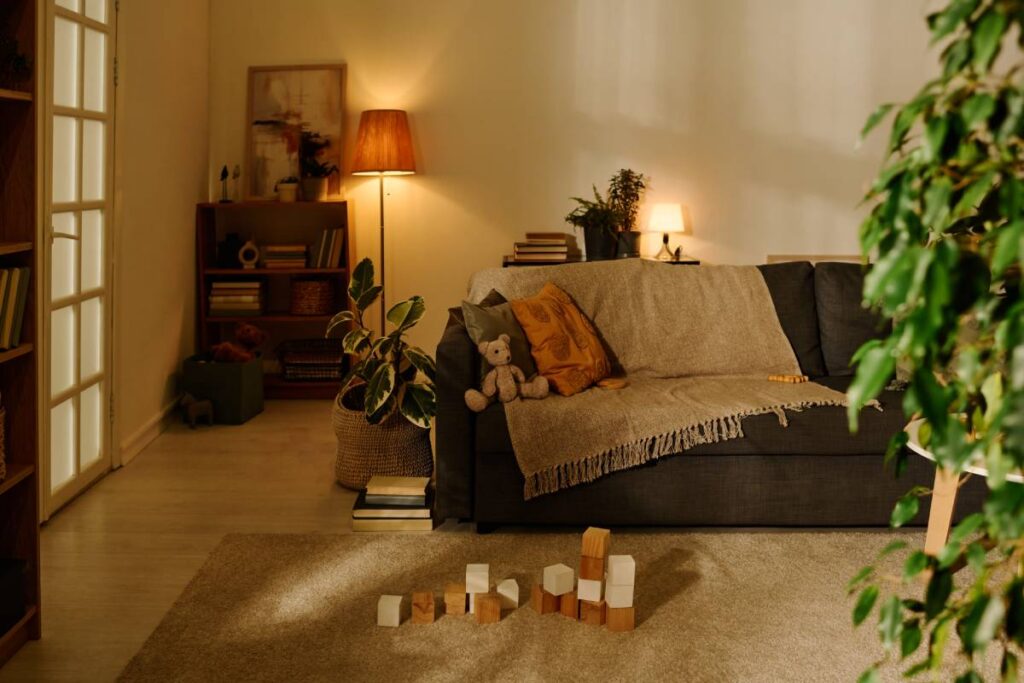
To create intimacy, you need layered lighting. Use a mix of floor lamps, table lamps, and wall sconces to create “pools” of light.
- Switch to Warm Bulbs: Look for bulbs labelled “Warm White” or 2700K.
- Dimmers are Key: Install dimmer switches to control the mood as the sun sets.
- Candlelight: Whether real or high-quality LED, flickering light mimics the primal comfort of a campfire.
2. Embrace the Power of “Textural Layering”
A room feels cold when it has too many hard surfaces (metal, glass, polished wood). You need to break these up with softness.
This is where the expertise of a Creative Property Stylist becomes invaluable. Professionals know that coziness is built from the ground up. Think of your room in layers; a leather sofa is beautiful, but it’s “cold” to the touch. By applying stylist-approved techniques, you can add a chunky knit throw and velvet pillows to instantly change the sensory experience.
- Rugs on Rugs: Try layering a smaller faux-sheepskin rug over a larger jute or sisal rug.
- Curtain Call: Replace thin blinds with heavy linen or velvet drapes to insulate the room visually and thermally.
- Maintenance Matters: Nothing kills a cozy vibe faster than dust or stains. If you’re investing in high-quality wool or plush floor coverings, learning what’s the best way to clean the carpet will ensure your sanctuary stays fresh and inviting year-round.
3. Choose a “Hugging” Colour Palette
Colour psychology plays a massive role in how we perceive temperature. Cool blues and greys can make a room feel larger, but also colder.
To increase the “cozy factor,” lean into earthy tones:
- Terracotta and Rust: Adds depth and warmth.
- Creamy Whites: Avoid “Stark White”; choose whites with yellow or pink undertones.
- Forest Green: Brings the calming effect of nature inside.
4. Curate Your Home’s “Scent Signature”
Coziness isn’t just visual; it’s olfactory. Your brain associates specific scents with safety and relaxation.

Avoid overpowering chemical sprays. Instead, opt for:
- Woody Notes: Cedarwood, sandalwood, or tobacco.
- Gourmand Scents: Vanilla, cinnamon, or freshly brewed coffee.
- Essential Oils: Lavender for bedrooms to signal the brain it’s time to unwind.
5. Bring the Outside In (Biophilic Design)
Humans have an innate need to connect with nature. A home without plants can feel stagnant.
Greenery breathes life into a room. Similarly, ensuring proper airflow to mimic the outdoors can help you unleash the serenity of the sea breeze right in your living room, naturally lowering cortisol levels. If you don’t have a green thumb, start with low-maintenance plants like a Snake Plant or Pothos.
- Natural Woods: Incorporate raw wood coffee tables or shelving to add organic warmth.
- Dried Florals: Eucalyptus or pampas grass provides texture without the need for watering.
Conclusion
Making your home feel cozy isn’t about buying the most expensive furniture; it’s about intentionality. By layering your lighting, softening your surfaces, and engaging your senses, you create a space that doesn’t just look good—it feels like a hug.
Which of these changes will you make first to your living space?