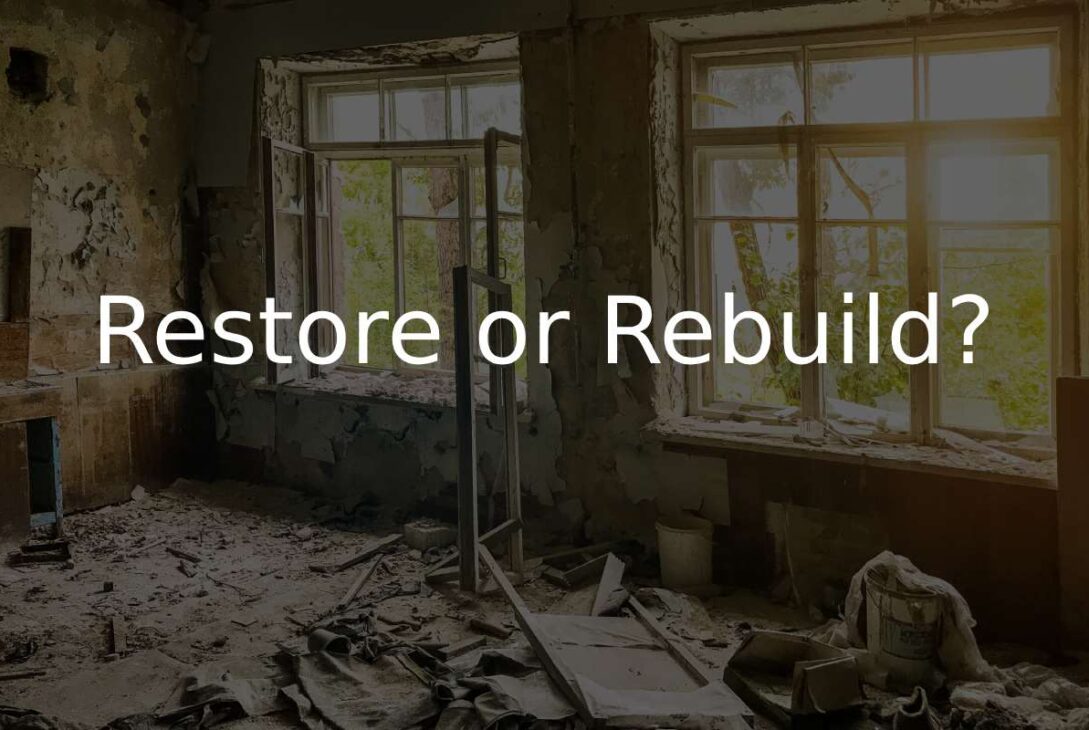
When a home is damaged—whether by fire, flood, storms, pests, or simple ageing—the big question homeowners face is this: Should you restore what’s there, or is it more practical to rebuild from scratch?
The answer isn’t always straightforward. Some homes can be brought back to life beautifully with the right restoration approach, while others may be too compromised structurally, financially, or legally to justify saving.
In this guide, we’ll break down the key factors that determine whether a home is restorable, what levels of damage are manageable, and when rebuilding might be the smarter choice—especially for Australian homeowners navigating insurance, compliance, and long-term value.
Understanding the Difference: Restoration vs Rebuild
Before diving into damage thresholds, it’s important to clarify the difference:
- Restoration involves repairing and returning a property to its original or near-original condition while preserving key structural and aesthetic elements.
- Rebuilding means demolishing all or most of the structure and constructing a new home from the ground up.
Restoration is often preferred for heritage homes or properties with sentimental or architectural value, while rebuilding can offer a clean slate with modern design, energy efficiency, and fewer hidden issues.
Types of Damage and What They Mean for Restoration
1. Structural Damage
Structural integrity is the most critical factor in deciding whether a home is restorable.
Restorable scenarios:
- Minor cracks in walls or foundations
- Localised timber damage
- Partial roof collapse affecting only one section
Rebuild considerations:
- Significant foundation failure
- Widespread structural movement or subsidence
- Load-bearing walls severely compromised
If the core structure—footings, beams, and load-bearing walls—is still sound or can be reinforced safely, restoration is usually viable. However, once these elements are extensively damaged, rebuilding often becomes the safer and more cost-effective option.
2. Fire Damage
Fire can range from surface-level damage to complete structural devastation.
Restorable scenarios:
- Smoke damage and soot staining
- Fire contained to one room or area
- Limited structural charring
Rebuild considerations:
- Structural steel weakened by heat
- Extensive charring of framing
- Fire spread across multiple levels
Fire-damaged homes often look worse than they are, but hidden issues like compromised structural strength and toxic residues can significantly increase restoration costs.
3. Water and Flood Damage
Water damage is one of the most deceptive types because its impact often continues long after the event.
Restorable scenarios:
- Short-term water exposure
- Damage limited to flooring, plaster, and fittings
- No prolonged moisture retention
Rebuild considerations:
- Long-term flooding leading to rot and mould
- Warped structural timber
- Electrical systems extensively damaged
Mould growth, in particular, can spread deep into walls and framing, making full remediation difficult and costly.
4. Pest Damage (Termites and Borers)
In Australia, termite damage is a major concern, especially in timber-framed homes.
Restorable scenarios:
- Localised timber damage
- Early-stage infestations
- Damage confined to non-structural elements
Rebuild considerations:
- Extensive termite damage to structural framing
- Long-term unnoticed infestations
- Compromised load-bearing components
The key issue here is how much of the structural timber has been affected. If large sections need replacing, rebuilding might be more practical.
5. Age-Related Deterioration
Older homes naturally degrade over time, but not all ageing damage requires a rebuild.
Restorable scenarios:
- Worn finishes and fixtures
- Outdated wiring or plumbing (upgradable)
- Minor structural wear
Rebuild considerations:
- Severe foundation settling
- Multiple outdated systems requiring full replacement
- Non-compliance with modern building codes
Heritage homes often fall into this category, where restoration can preserve character but requires careful planning and expertise.
The 50% Rule: A Common Guideline
A widely used rule of thumb in the building industry is the “50% rule.”
If the cost of restoring the home exceeds 50% of the cost of rebuilding, many professionals will recommend starting fresh.
However, this rule isn’t absolute. Other factors—such as heritage value, location, and emotional attachment—can outweigh pure financial logic.
Key Factors That Influence the Decision
1. Cost Comparison
You’ll need a detailed cost assessment for both options:
- Restoration (including hidden repairs)
- Full rebuild (including demolition and approvals)
Restoration can sometimes appear cheaper upfront but become more expensive as hidden issues are uncovered.
2. Insurance Coverage
Insurance policies often play a major role:
- Some policies cover “like-for-like” restoration
- Others may favour rebuilding depending on the extent of damage
Understanding your policy limits and inclusions is critical before making a decision.
3. Building Codes and Compliance
In Australia, restoring older homes can trigger compliance requirements:
- Electrical and plumbing upgrades
- Structural reinforcements
- Energy efficiency standards
Sometimes, bringing an old home up to current codes can be nearly as expensive as rebuilding.
4. Heritage and Architectural Value
If your home has heritage significance, restoration is often the preferred or required option.
Preserving original features—such as timberwork, facades, and detailing—can significantly increase the property’s cultural and financial value.
5. Timeline and Convenience
- Restoration can be unpredictable and time-consuming
- Rebuilding offers a clearer timeline but involves permits and approvals
If you need to move back in quickly, this factor can heavily influence your choice.
6. Long-Term Value
A rebuilt home may:
- Offer better energy efficiency
- Require less maintenance
- Increase resale value
However, a well-restored home—especially a character property—can also command a premium in the market.
When Restoration Is the Better Choice
Restoration is typically the right path when:
- The structural framework is largely intact
- Damage is localised rather than widespread
- The home has heritage or sentimental value
- Restoration costs are significantly lower than rebuilding
- You want to preserve original character and craftsmanship
When Rebuilding Makes More Sense
Rebuilding is often the smarter option when:
- Structural damage is extensive
- Multiple systems (plumbing, electrical, roofing) need full replacement
- The cost of restoration approaches or exceeds rebuilding
- The layout is outdated and difficult to modernise
- You want a more energy-efficient, modern home
The Hidden Risks of Restoration
While restoration can be rewarding, it’s important to be aware of potential risks:
- Unexpected costs as hidden damage is uncovered
- Project delays due to complexity
- Difficulty sourcing matching materials for older homes
- Compliance challenges with modern regulations
These risks can turn what seems like a cost-effective solution into a more expensive and stressful process.
Making the Right Decision
Ultimately, the choice between restoration and rebuilding comes down to balancing:
- Safety
- Cost
- Time
- Emotional value
- Future goals for the property
The best approach is to get a professional assessment from experienced builders or restoration specialists who understand both structural integrity and heritage considerations.
Final Thoughts
There’s no one-size-fits-all answer when it comes to deciding whether a damaged home should be restored or rebuilt. While minor to moderate damage is often repairable, severe structural issues, widespread deterioration, or escalating costs can quickly tip the scale toward rebuilding.
If you’re based in Sydney and facing this exact dilemma, getting expert advice is crucial. And if you’re unsure whether your home is worth restoring or better off rebuilt, it’s a smart move to speak with specialists who deal with these decisions every day.
For tailored guidance and a professional assessment, consider reaching out to Heritage Restorations & Renovations. Their experience in handling both restoration and renovation projects—particularly for older and character homes—can help you make an informed decision that protects both your property and your investment.